What is ayahuasca integration?
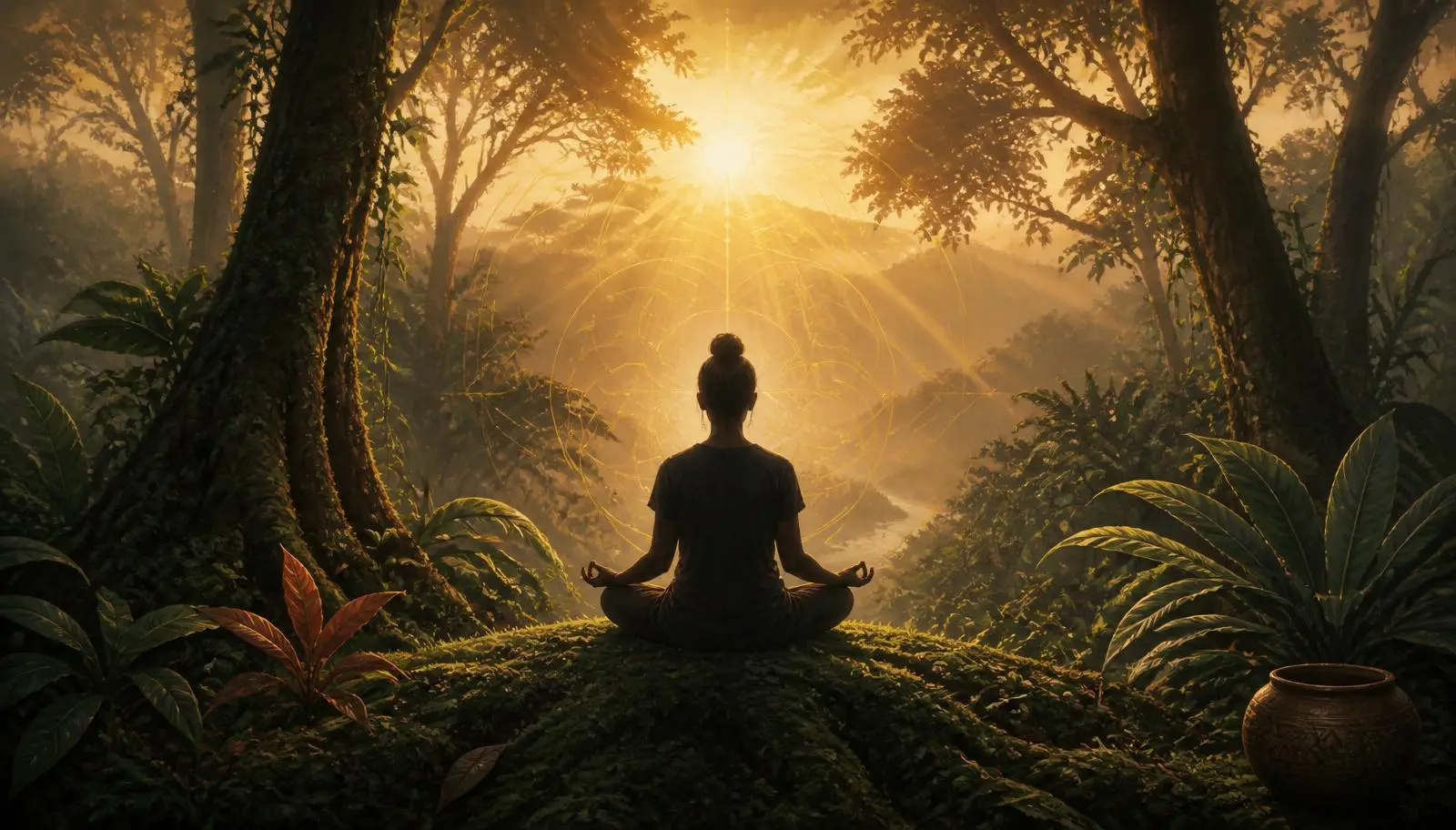
Ayahuasca integration is the process of taking what surfaced in ceremony — the visions, the memories, the emotions, the insights — and weaving them into the fabric of your ordinary life. It is the difference between a peak experience you tell stories about at parties and a genuine, felt reorganisation of how you live, love, work and relate.
In practice, integration is not one thing but a set of overlapping practices: journaling, therapy, group circles, somatic work, dietary shifts, changes in relationship and vocation, spiritual practice, and long walks alone. Some of it is quiet and internal. Some of it is deeply relational. All of it takes longer than most people expect.
The Amazonian traditions the medicine comes from have always understood this. Dieta, silence, isolation, and specific plants surround ayahuasca work not as add-ons but as the actual work. Western psychedelic culture is only recently catching up to what indigenous lineages have always known: the ceremony is a punctuation mark. Integration is the sentence.
Why integration matters more than the ceremony
You can have a life-changing ayahuasca experience and, six months later, be exactly the person you were before. This is more common than the retreat industry likes to admit. The reason is simple: insight without integration decays. The nervous system remembers old patterns faster than the mind remembers new ones.
Integration is what stops the fade. It is where the temporary state — that expanded, tender, radically honest state you visited in ceremony — slowly becomes a trait. Neuroscience calls this consolidation. Traditional healers call it landing the medicine. Either way, it happens in the weeks and months after the ceremony ends, not during it.
This is also where the real risks live. Poorly integrated ayahuasca experiences can produce spiritual bypassing, grandiosity, destabilised relationships, career impulsivity, and — in some cases — genuine psychological harm. Every experienced ayahuasca practitioner know the same thing: the greatest challenge is not the ceremony. The real challenge is in the integration that follows.
“The greatest challenge is not the ceremony, it's the integration that follows"
The 4 phases of integration
Integration is not linear, but most people move through four recognisable phases. Knowing which one you are in helps you choose the right support.
0–72 hours
The tender window
The nervous system is wide open. Sensory input is amplified, boundaries are thin, dreams are vivid, and small things can move you to tears or awe. This is not the time for big decisions or hard conversations. This is the time to rest, hydrate, eat simply, stay close to safe people and let the body settle. Journaling in this window captures material you will not remember later.
Week 1–2
The download
The initial afterglow softens and the meaning-making begins. Visions and body sensations start organising into themes: something about your father, your work, your relationship to your body. This is the phase where a first integration session with a coach or therapist pays enormous dividends. Alone, most people either over-interpret or under-interpret what they saw.
Month 1–3
The ground shift
Insights begin asking you to change something concrete: a habit, a job, a relationship, a way of speaking to yourself. This is the phase where resistance shows up. The old patterns push back. Integration groups, ongoing therapy and embodiment practices matter most here — you need containers strong enough to hold both the truth of what you saw and the friction of actually living it.
Month 3 and beyond
The long arc
The ceremony becomes part of your story rather than the centre of it. Life feels a little less dramatic, a little more spacious. Some insights are still unfolding two years later. Some only make sense in the light of a later ceremony. Long-arc integration looks like a lived spiritual practice: regular contemplation, honest community, service to something larger.
Signs you need integration support
You do not need a specialist for every ceremony. You do need one when any of the following are present two weeks or more after your last session:
- Intrusive imagery, memories or body sensations that interrupt daily life
- Emotional flooding that you cannot self-regulate within a day
- Persistent sleep disruption, nightmares or hypervigilance
- Feeling disconnected from your body, your partner or ordinary time
- Impulsive decisions about work, relationships or money the ceremony seemed to demand
- A conviction of specialness, mission or spiritual authority that friends find worrying
- Grief, rage or shame that has arrived without a clear place to land
- Difficulty explaining any of the above to the people closest to you
None of these are pathological. All of them respond well to a trained integration practitioner. Reaching out early prevents small openings from becoming large ruptures.
10 integration practices that actually work
These are the practices our facilitator community returns to across thousands of ceremonies. Pick two or three. Consistency beats intensity.

Daily journaling
Ten minutes, longhand, first thing in the morning. Not to analyse — to record. The material metabolises through the writing itself.
Weekly integration circle
A trained-facilitated group of peers who understand ceremony. One hour a week for eight weeks changes everything.
Somatic movement
Yoga, breathwork, ecstatic dance, TRE. Whatever moves the body slowly and honestly. Insight lives in tissue, not thought.
Contact with nature
Sit under the same tree for twenty minutes, three times a week. The nervous system remembers what the ceremony reminded it of.
Simple food, less alcohol
Plants, water, rest. Post-ceremony dieta is not a rule; it is a way of extending the state a little longer.
One conversation per week
With someone who can hear the whole of you. Not to teach them — to be witnessed.
Therapy or coaching
Ideally with a practitioner who understands non-ordinary states. See the AIA directory of vetted specialists.
Meditation or contemplative prayer
Even ten minutes. Ceremony sensitises the mind to stillness — use the window.
Creative expression
Paint the vision. Write the poem. Sing the song. Symbolic material integrates through symbolic language.
Service
At month three, find something outside yourself to give to. Integration completes in usefulness, not in more processing.
Working with an integration coach or therapist
An ayahuasca integration coach is not a replacement for therapy, and a therapist without plant medicine training is often not enough. What you want is someone who can hold both — the psychological literacy to understand your history and the ceremonial literacy to understand what actually happened to you.
The right practitioner does three things: they normalise (this is a known territory, others have walked it), they contextualise (here is what your specific material likely means), and they pace (they slow you down when you want to rush the meaning and steady you when you want to run from it).
Fees vary widely. Expect anywhere from $80 to $250 an hour in most Western markets. Many practitioners offer sliding scale. Package deals of four to six sessions across a first integration arc are common and usually a better value than one-offs.
AIA keeps a global, vetted directory of integration therapists, coaches and facilitators. Every specialist listed has been reviewed against our practitioner standards.
Common challenges & how to meet them
Spiritual bypassing
Using ceremony insight to skip past ordinary human pain. The tell is grandiosity — you feel above your old problems rather than in a new relationship with them. Antidote: return to the body, to relationships, to concrete daily practice.
Relationship strain
Partners, friends and family often experience your return as distance. Talk about the felt sense of what changed rather than the vision itself. Include them where you can. Give them time.
Re-entering work
Ordinary responsibilities can feel absurd for the first weeks. Do not quit the job in month one. Let the ceremony change your relationship to work before it changes the work itself.
The dark night
Sometimes integration surfaces material harder than what came up in the ceremony. This is not the medicine failing. This is the medicine working. Do not go through it alone — find a therapist, a circle, a friend who has been there.
Wanting to run back for another ceremony
The impulse is common and usually a red flag. Another ceremony rarely finishes what a previous one started. Integration does. Wait at least three to six months between deep journeys unless a trusted teacher advises otherwise.
Ayahuasca integration circles: what to expect
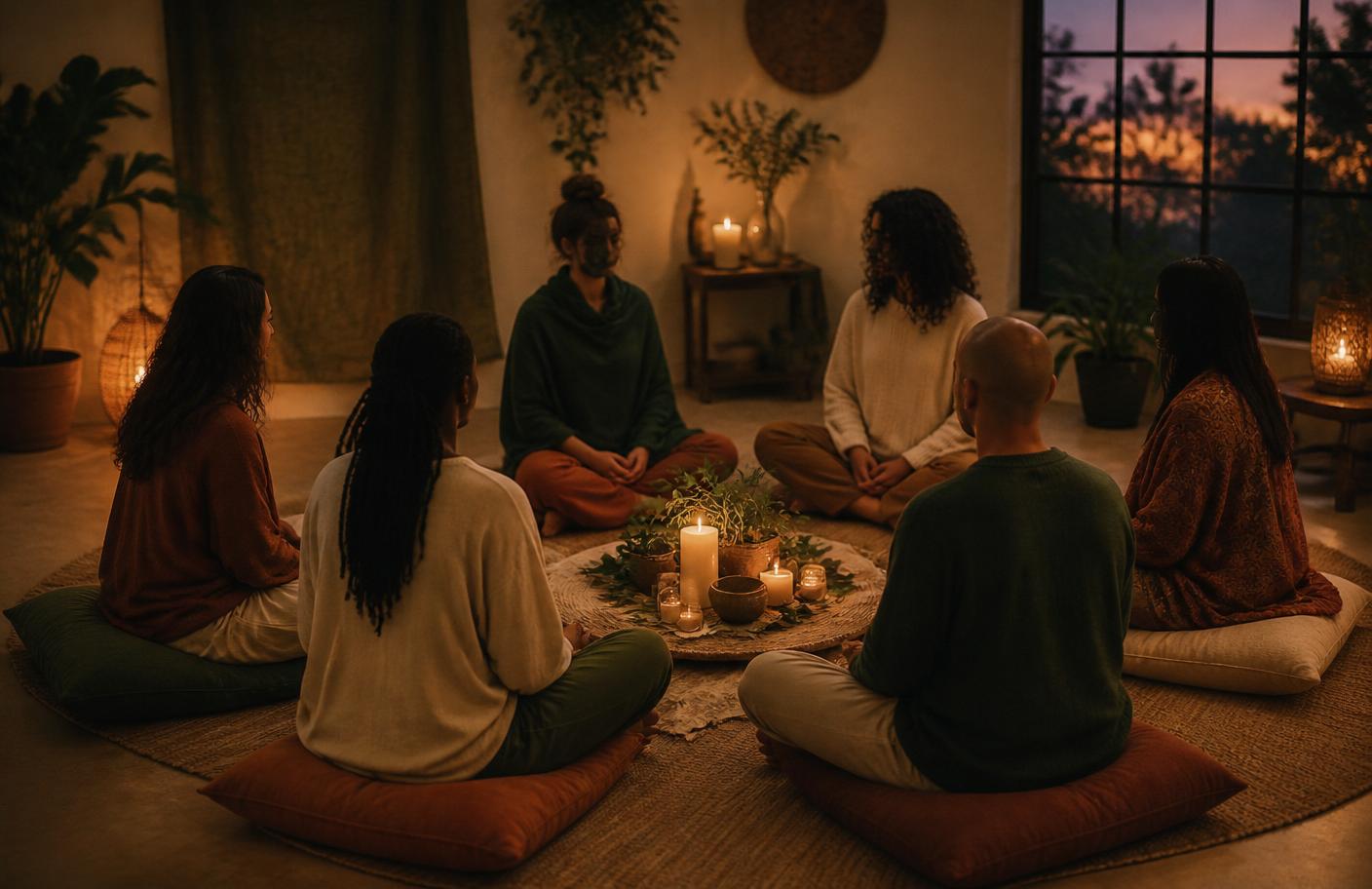
An integration circle is a small, facilitated group of people who have worked with ayahuasca or related plant medicines and meet weekly or fortnightly to hold each other's integration process. Circles are not therapy. They are structured witnessing.
A typical circle runs 90 minutes: opening, a brief teaching or theme, a round of sharing where each person speaks uninterrupted, and a closing. Confidentiality is absolute. Advice-giving is discouraged. The container itself does the work.
AIA runs both online and in-person circles. Online circles are the most accessible entry point — no travel, mixed geographies, and often more diverse. In-person circles offer something online cannot: the felt sense of other bodies in a room with you.
Preparation is integration too
Integration begins the moment you decide to sit with the medicine, not the morning after. How you prepare — what you eat, what you release, what you name as your intention — shapes what surfaces in the ceremony and how workable it becomes afterwards.
A grounded preparation includes dietary simplification, a period of media and stimulant reduction, honest inventory of what is asking to be seen, and — if possible — one conversation with a trusted guide or therapist about what you are bringing to the container.
Frequently asked questions
About the author

David Vox
Founder, Ayahuasca Integration Alliance · Retreat Facilitator
David founded the Ayahuasca Integration Alliance after a decade of work with the medicine — first as a participant, then as a facilitator training under indigenous shamans, and now as a teacher of integration to a new generation of facilitators.
He lives on an ayahuasca retreat land and leads yearly retreats and integration cohorts. His work bridges ceremony and everyday living through structured practices that honor the depth of the medicine.
Related deep-dives
Go deeper on a specific path
Ayahuasca Integration Retreat
How to choose a retreat that supports the full arc — before, during and after.
Ayahuasca Integration Coach
What a coach does, when to hire one, and 10 questions to vet the right fit.
Ayahuasca Integration Therapist
When clinical support is indicated and how to find a psychedelic-informed therapist.
Ready to begin?
Three ways to start integrating right now, at any budget: