Free guide

The Four Movements of Surrender

An invitation to surrender — a gentle map you can return to before ceremony, during ceremony, and throughout integration.

New here? Start with the full ayahuasca integration guide.

  • Let GoReleasing control and resistance.
  • Let InOpening to what arrives.
  • Let BeResting with what is.
  • AllowTrusting the unfolding.
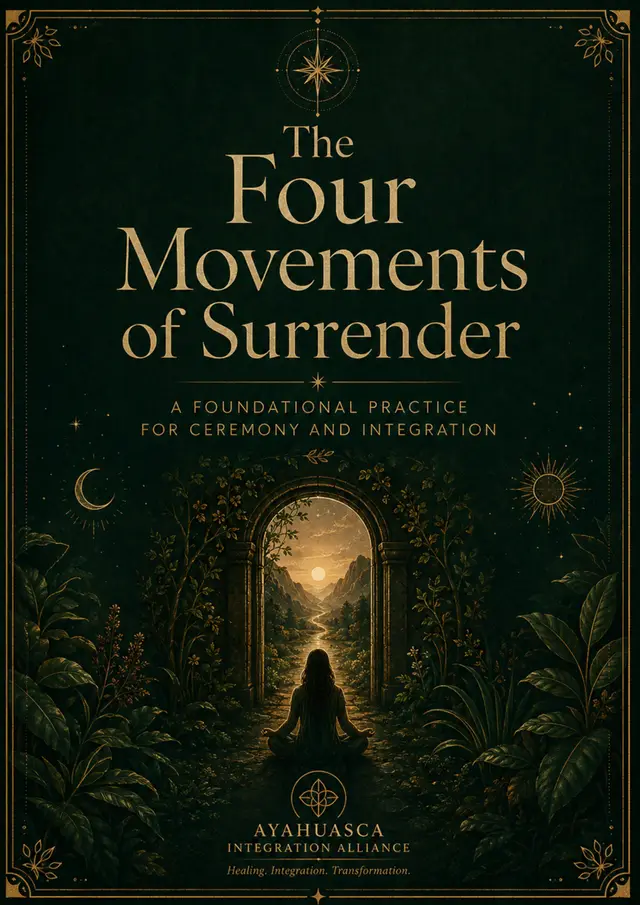
Cover of The Four Movements of Surrender guide

Get the free guide

We'll email you the PDF right away.

Free, no spam. You can unsubscribe any time.

About this guide

The Four Movements of Surrender

Surrender is one of the most misused words in the psychedelic conversation. In this short guide we break it into four practical movements you can actually work with — in ceremony and in the weeks that follow — so that surrender stops being a slogan and starts being a skill.

The four movements are simple to name and lifelong to practice. Together they describe what is really happening when someone lets the medicine move them, and what tends to be needed for the same to happen in ordinary life.

Who this is for

It is for people preparing for a ceremony who want a real practice, not a slogan, to bring with them. It is for people already integrating who notice they have been forcing what wants to be released. And it is for long-term practitioners who want a shared vocabulary for what has been quietly working all along.

What surrender is not

Surrender is not going limp. It is not giving up. It is not pretending you have no preferences. And it is not a performance you put on for the medicine — as if the ceremony will reward you for looking sufficiently open. Real surrender is more specific and more ordinary. It is a series of small yeses to what is actually happening, made in real time, with a body that trusts it will be held.

The four movements name the parts of that yes: what you stop bracing against, what you stop reaching for, what you allow to move through you, and what you let stay. Each movement is a skill. All four are trainable. None of them are one-off events; they are gestures you keep making, in ceremony and out.

How to work with the guide

Download the PDF and read it once, slowly. Then choose one of the four movements to focus on for a week — the one that feels most alive, or the one you have been avoiding. Notice where in your daily life it wants to happen: a conversation you have been dodging, a feeling you have been managing, a decision you have been over-thinking. Practise the movement there. Come back to the guide at the end of the week and pick the next one.

The four movements repeat forever. There is no graduation. You will meet each of them again in ceremony, in relationship, in grief, in success, in death. The point is not to master them; it is to recognise them when they arrive, and to say yes.